 Inclusion Quality Mark for MATsInclusion Quality Mark for MATs
Your trust has a vision for inclusion. Now give every school a structured way to deliver it.
We help trust inclusion leads create their own quality mark — with a framework shaped around your priorities, a system to run structured evaluations across every school, and training to make it work. No external assessors. No generic criteria. Just a standard that belongs to your trust.
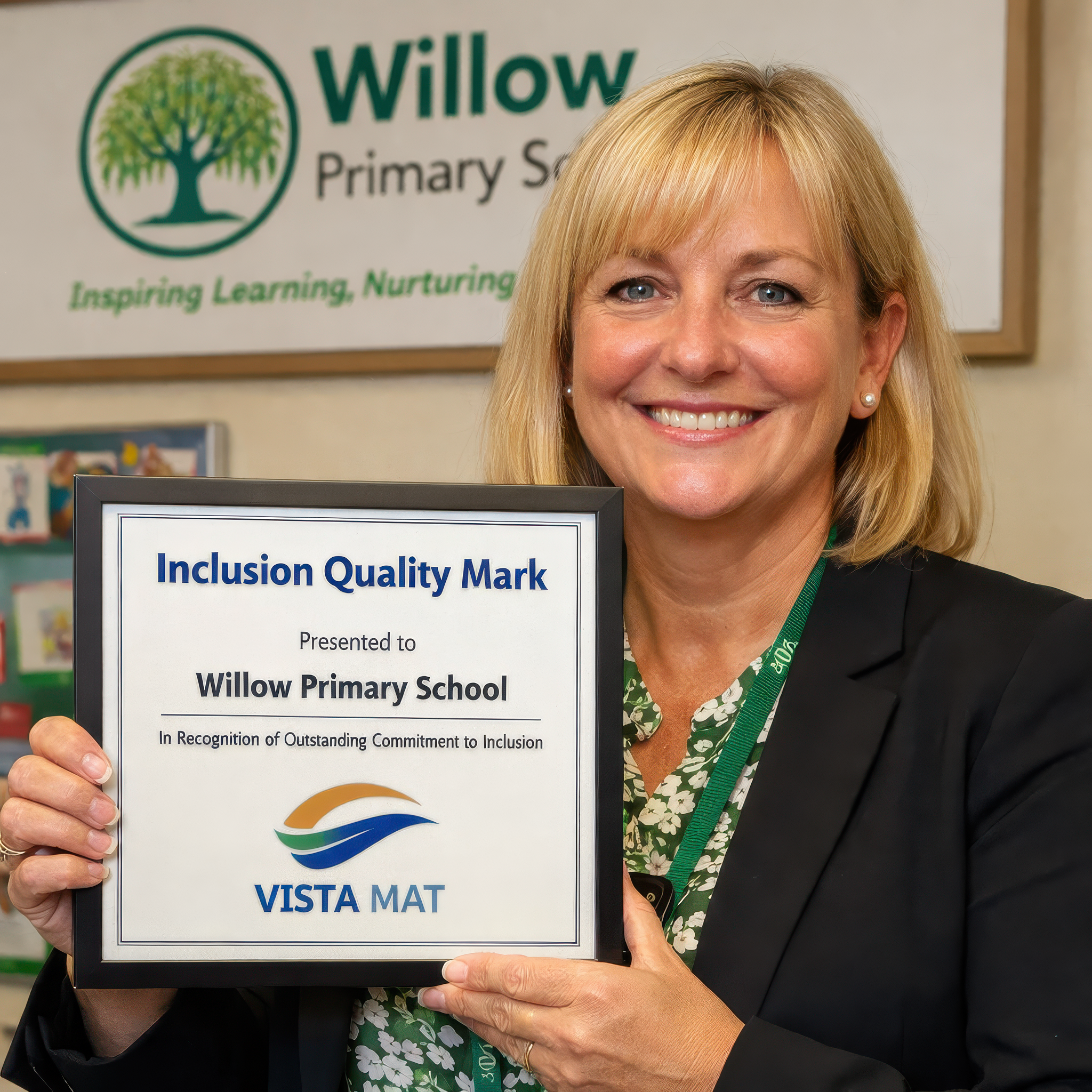
Build your own inclusion standard and let your own experts lead the accreditation.
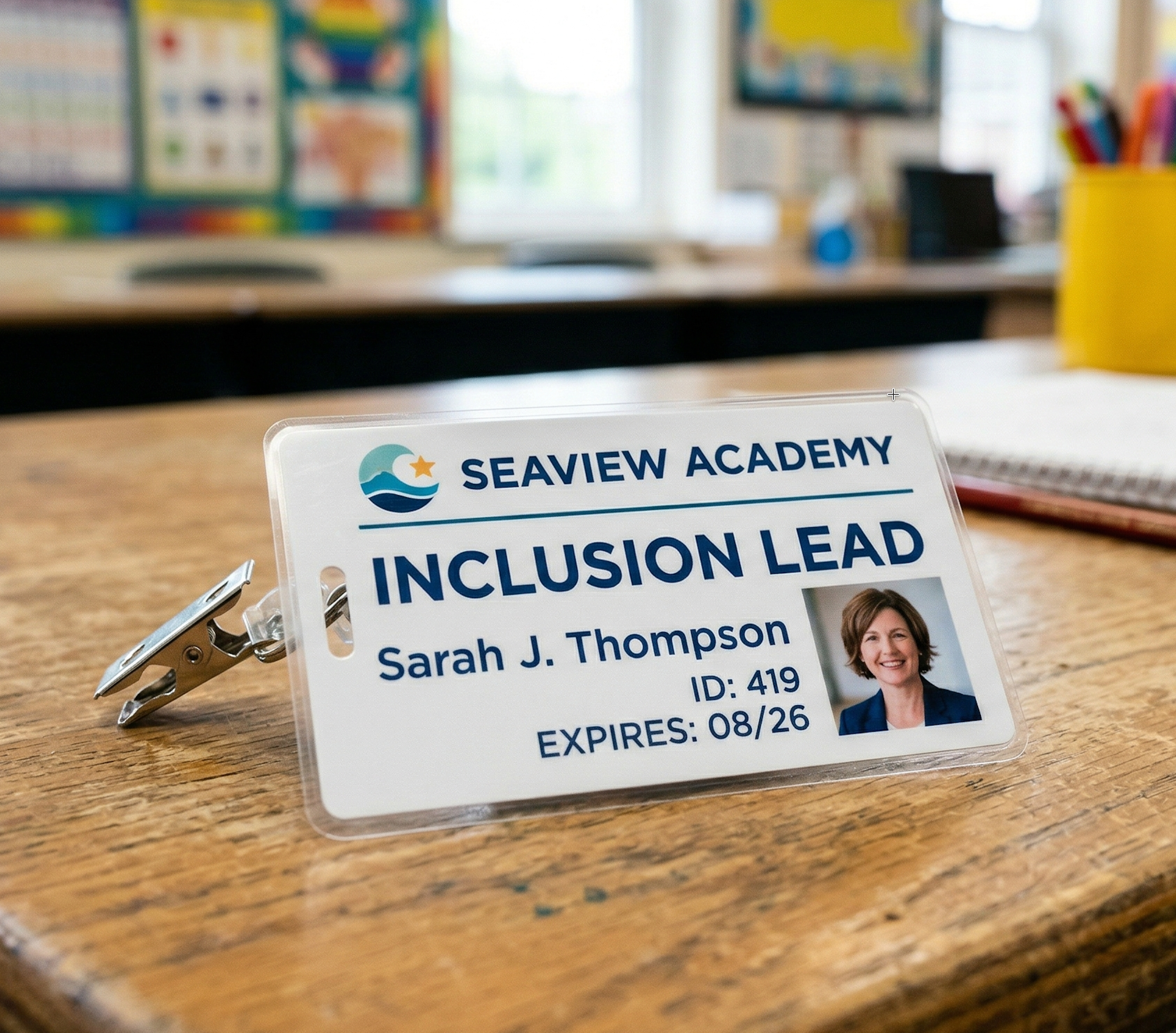
You're responsible for inclusion across multiple schools — but every school does it differently. You know what good looks like, but there's no shared framework to measure it against.
You spend time chasing evidence, reading reports and trying to build a picture that doesn't really exist yet. External awards don't give you the trust-wide view you need.
An internal, trust-wide Inclusion Quality Mark gives you the framework, the system and the process to lead inclusion consistently across every school — on your terms.
External awards are expensive, assess schools in isolation, follow someone else's criteria and ignore the inclusion expertise your trust already has.
External inclusion awards often cost more than £1,000 per school. Across a trust with ten or twenty schools, that adds up quickly for a process that may not reflect your priorities.
Most external awards assess schools individually. Trusts need a single inclusion standard that works across all schools, so leaders can compare, support and challenge consistently.
Generic inclusion frameworks may not reflect your trust's context — the demographics of your schools, the needs of your communities, or the inclusion priorities your trust has already set.
Your trust already has SENCOs, inclusion leads and experienced practitioners across its schools. An Inclusion Quality Mark turns that distributed expertise into a shared, trust-owned standard.
The answer isn't another award. It's a trust-owned process that every school evaluates against and every leader trusts.
One framework across all your schools, instead of paying per school per award to an external organisation.
Shaped around your trust's demographics, priorities and the real needs of your schools — not a generic framework.
A trust-wide IQM builds the evidence and self-evaluation culture that inspectors are specifically looking for.
Trust validators who know your schools, not external assessors who visit once and move on.
No more fragmented, school-by-school approaches to inclusion. One shared framework the whole trust works towards.
The process is developmental — schools evaluate, reflect, act and improve, not just collect a badge.
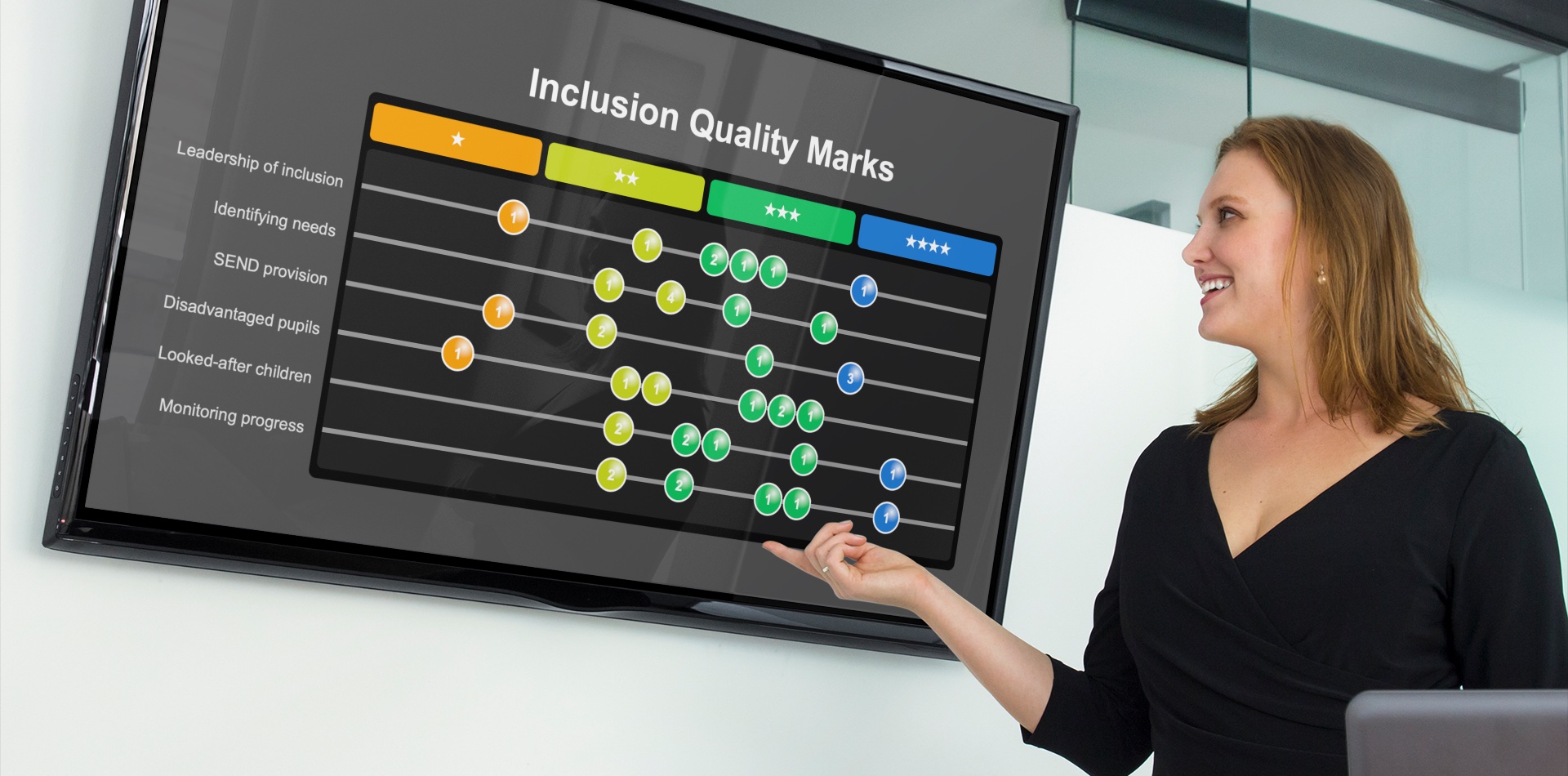
Compare inclusion across schools, spot patterns, identify where strong practice sits and where support is needed.
Structured self-evaluation develops professional skills and strengthens leadership of inclusion at every level.
No annual renewal fees to an external body. No risk of losing accreditation you don't own. It belongs to your trust.
To schools, parents and Ofsted — your trust takes inclusion seriously enough to set its own standard and hold every school to it.
Set the inclusion standard yourself — criteria shaped by your trust's values, your pupils' needs and the real context of your schools.
From the 2025 inspection framework, every school is graded separately on inclusion. Inspectors evaluate how well leaders identify needs, support disadvantaged pupils, deliver SEND provision and support looked-after children. An Inclusion Quality Mark gives your schools a structured way to evaluate and evidence exactly what Ofsted is looking for.
An Inclusion Quality Mark doesn't guarantee an Ofsted grade — but it means every school in your trust is already evaluating inclusion with the same rigour Ofsted expects.
Ofsted asks whether leaders identify needs quickly and accurately. Your IQM evaluates exactly this across every school.
Ofsted grades SENCo leadership, the quality of support and how progress is monitored. Your IQM builds ongoing evidence of all three.
Ofsted examines whether the pupil premium strategy is evidence-based and having impact. Your IQM creates a trust-wide structure for this.
Ofsted looks at designated teachers, personal education plans and multi-agency working. Your IQM includes this as a core evaluation area.
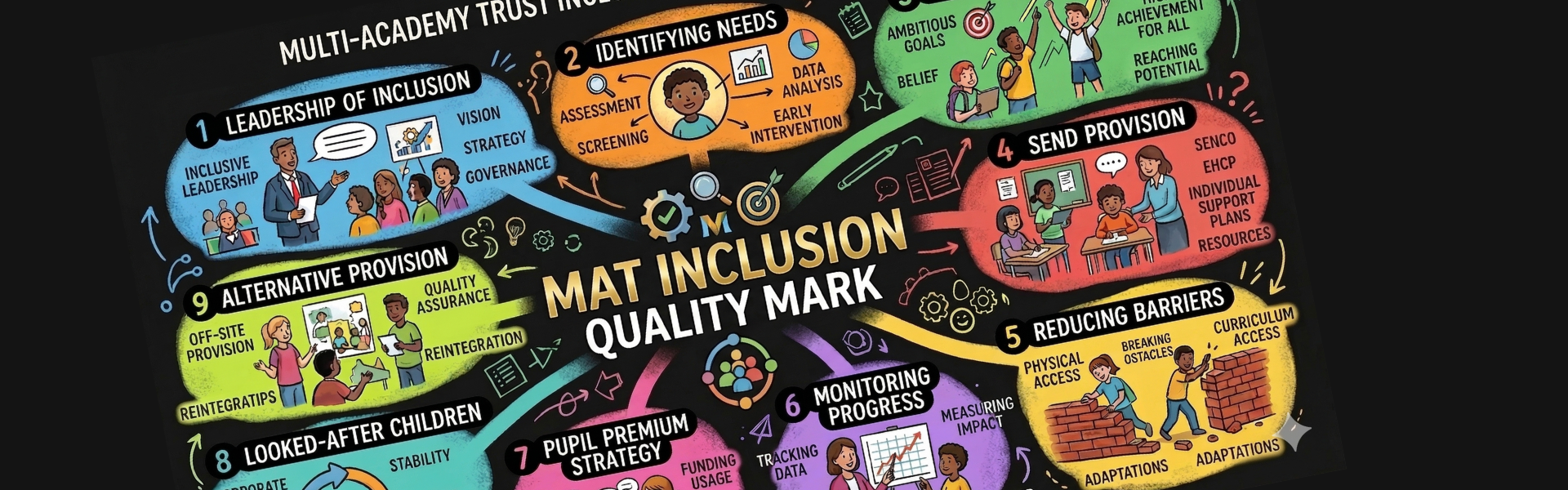
An Inclusion Quality Mark does more than recognise good practice. It gives your trust a shared process for evaluating inclusive provision, identifying barriers and turning insight into action across every school.
Define what strong inclusive practice looks like across the trust with clear areas, levels and criteria — from SEND provision to leadership of inclusion.
Give every school the same structure for evaluating inclusion, gathering evidence and building improvement plans.
Identify where strong inclusive practice sits across the trust and help schools learn from each other.
Keep inclusion evaluations live so schools can review progress, refine actions and keep building a more inclusive culture over time.
The model is straightforward, scalable and built around professional dialogue.
We work with your inclusion leads to define the quality mark framework: the areas to evaluate, the levels of performance, the criteria and the evidence expected — all shaped around your trust's inclusion priorities.
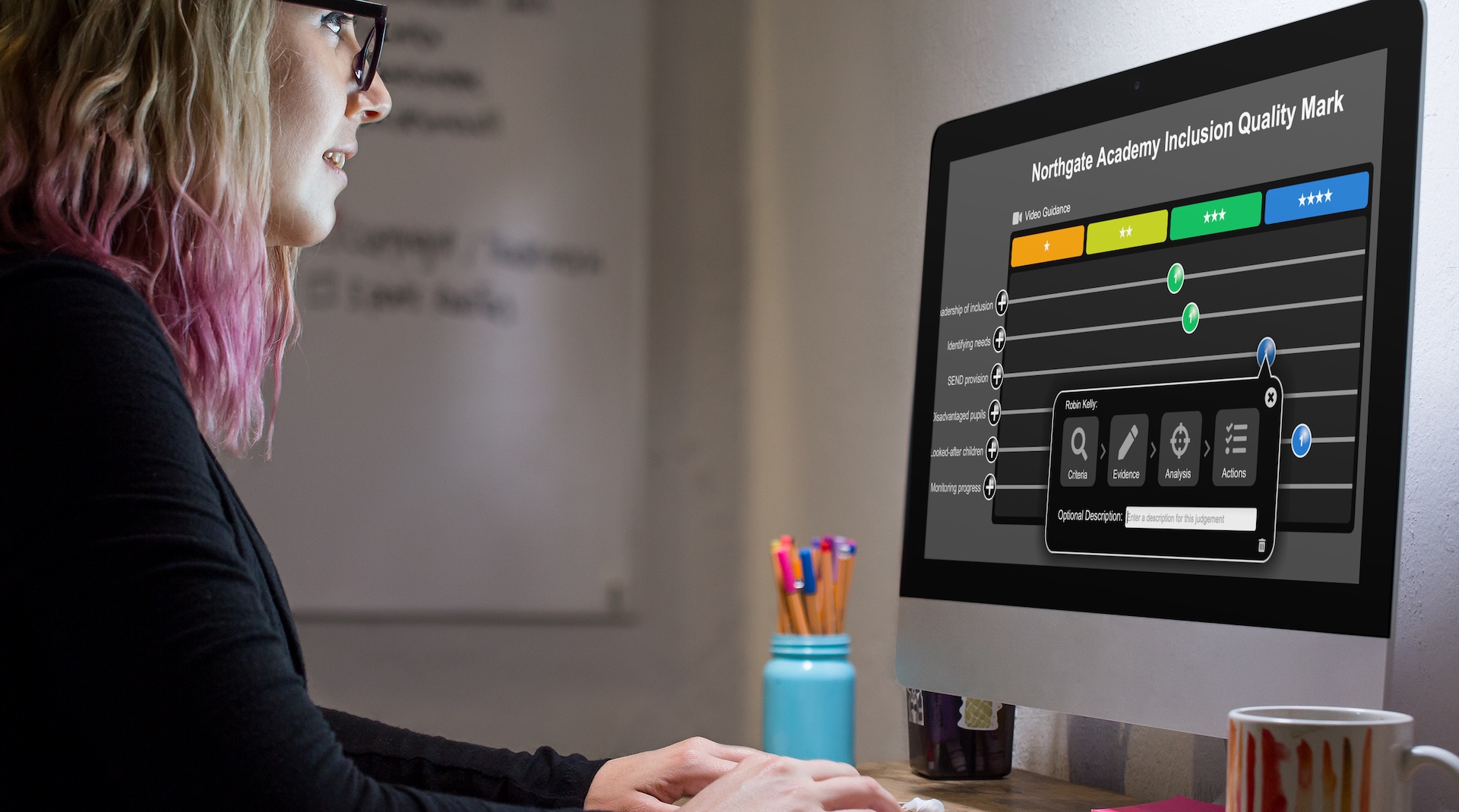
Schools evaluate their inclusive practice against the framework, record evidence, reflect on strengths and barriers, and create improvement actions using a shared structure. See how it works →
A trust validator reviews the inclusion evaluation, explores the evidence and holds a focused professional conversation with the school's inclusion lead or SENCO.
If the standard is met, the school receives the trust's Inclusion Quality Mark. The evaluation then continues as part of an ongoing cycle of inclusion improvement.
This keeps the process developmental rather than performative.

These are the six core areas we typically shape an Inclusion Quality Mark around. Every trust tailors the detail — the criteria, levels and evidence — to reflect their own context and priorities.
How well senior leaders set the vision, allocate resources and hold the school accountable for inclusive outcomes.
How effectively the school identifies pupils who need additional support — early, accurately and without waiting for crisis.
The quality of support for pupils with special educational needs and disabilities, from classroom practice to specialist intervention.
How well the school uses pupil premium and other funding to close gaps and improve outcomes for disadvantaged learners.
The quality of support, stability and ambition for children in care and previously looked-after children.
How the school tracks, analyses and acts on progress data for all vulnerable groups to drive timely improvement.
These areas are starting points. Your trust may choose to add, combine or reframe areas based on your strategic priorities and the needs of your schools.
We work alongside your trust end-to-end — shaping the inclusion framework, providing the evaluation system, and delivering the training needed to run your Inclusion Quality Mark across every school.
We work with your trust's inclusion leads to shape the quality mark itself: the areas to evaluate, the levels, the criteria and the evidence expectations. This gives you a trust-owned inclusion framework that reflects your priorities, your context and your definition of strong inclusive practice.
iAbacus provides the full system for running the Inclusion Quality Mark across your schools. Schools complete structured inclusion evaluations, attach evidence, analyse strengths and barriers, create actions, and keep a live record of progress. Trust leaders and validators can review evaluations, compare schools and see inclusion patterns across the trust. See iAbacus in action →
We support SENCOs, inclusion leads and trust leaders to use the framework well. That includes onboarding, training and practical workshops to help leaders evaluate inclusive practice effectively, gather useful evidence and turn findings into meaningful improvement actions.
The result is an Inclusion Quality Mark process that is practical to run, consistent across schools and genuinely useful for improving inclusive practice trust-wide.
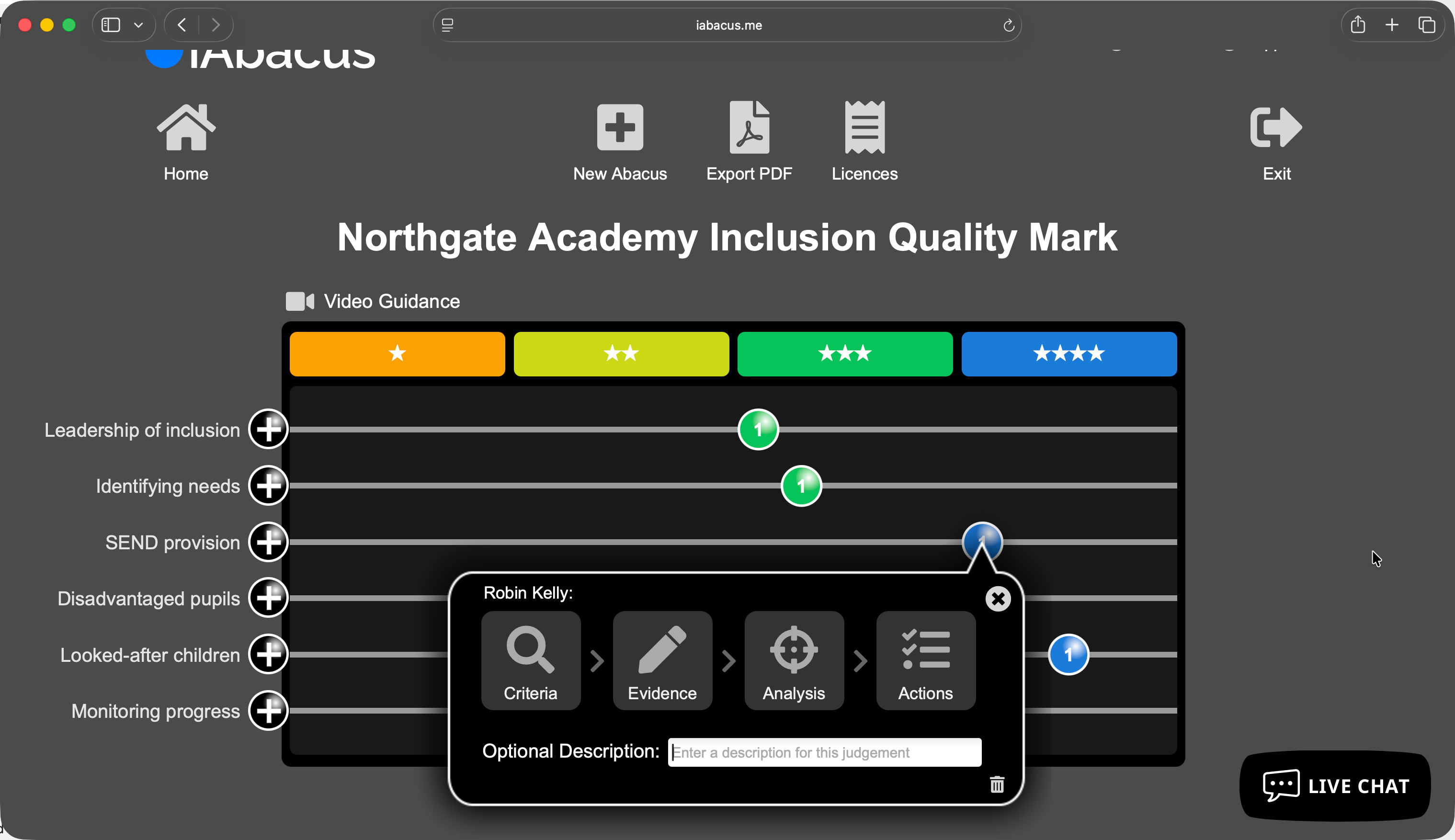
Each school evaluates against the trust's inclusion framework, recording evidence, strengths, barriers and actions for every area.
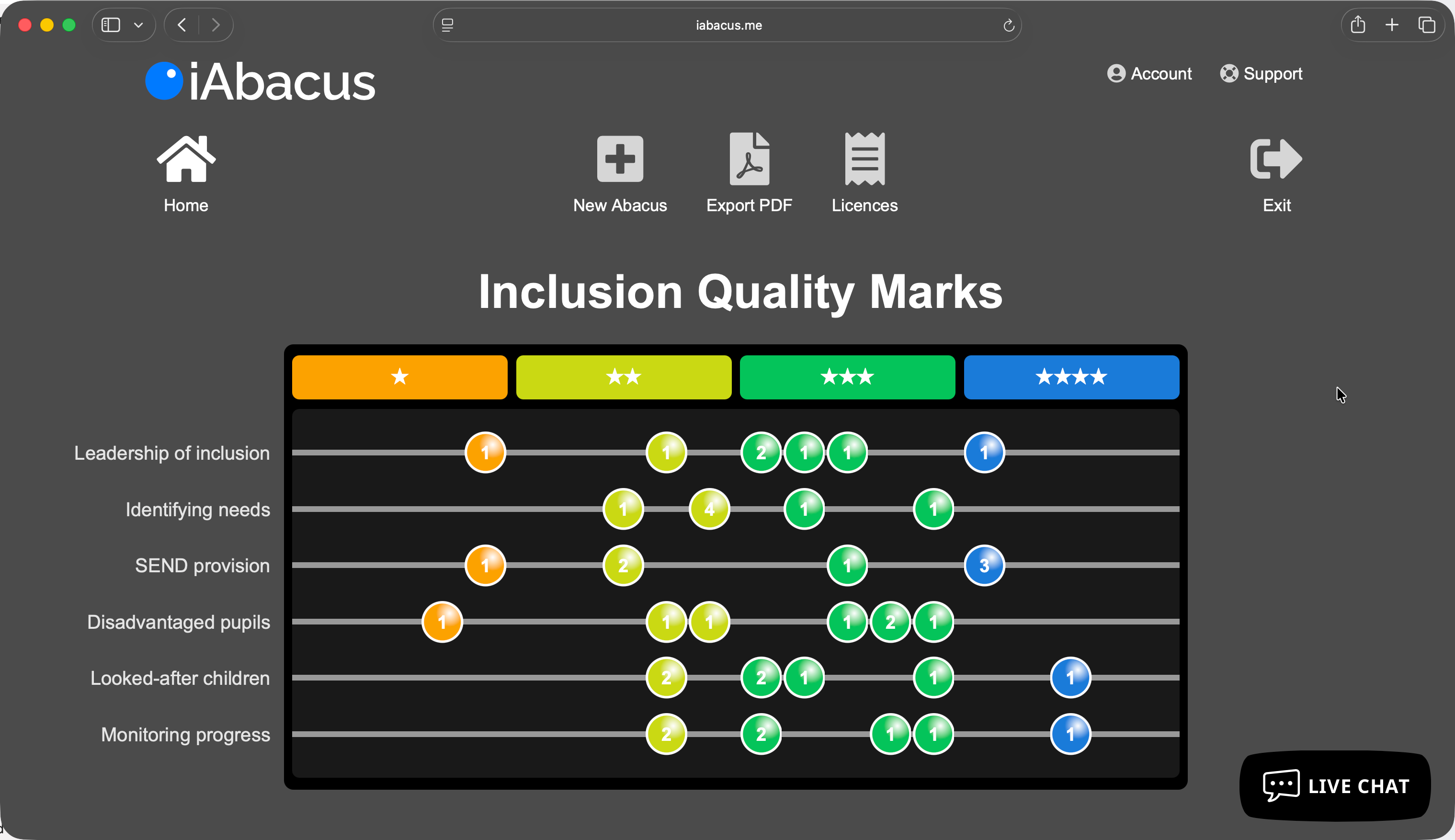
Trust leaders see all schools at a glance, comparing inclusion progress across every area of the quality mark.

For Directors of Inclusion, trust SEND leads and inclusion strategists who want a consistent, trust-wide view of inclusive practice and a structured way to drive improvement.
For CEOs and Directors of Education who want inclusion to be evaluated with the same rigour and consistency as curriculum or outcomes — not left as a tick-box exercise.
For SENCOs, headteachers and deputy heads who want a clear and credible process for evaluating inclusive practice and leading inclusion improvement in their school.
Build recognition that reflects your values, is shaped by your pupils' needs, and drives real improvement across every school.
Your Inclusion Quality Mark deserves its own identity. We design professional logos and badges for your trust and schools — giving inclusion real visibility across certificates, reports, websites and school displays.

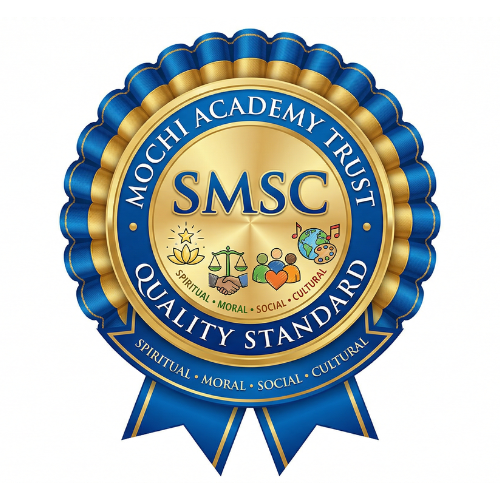
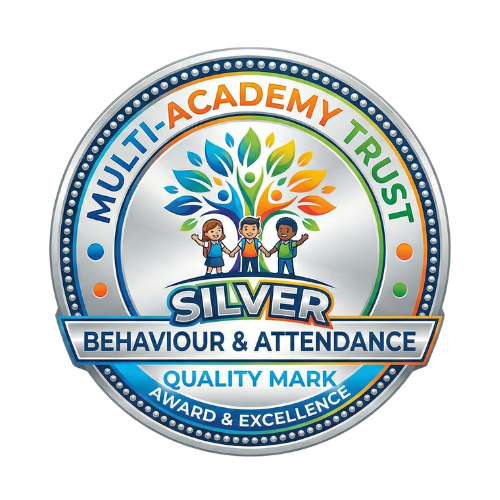
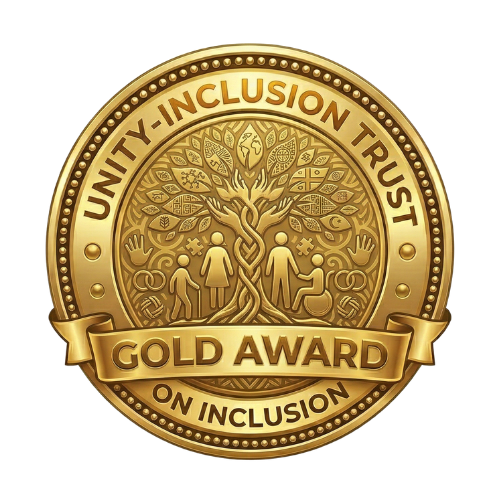

Each design is tailored to your trust's branding and your inclusion priorities. These are yours to own and use across certificates, reports, websites, email signatures and school displays.
Book a meeting to explore what an Inclusion Quality Mark could look like in your trust. We will talk through your inclusion priorities, discuss how the framework would work across your schools, and show you how iAbacus can support the process.
No obligation. No hard sell. Just a practical conversation about what would work for your schools.
Everything you need to know about creating and running a trust-owned Inclusion Quality Mark.